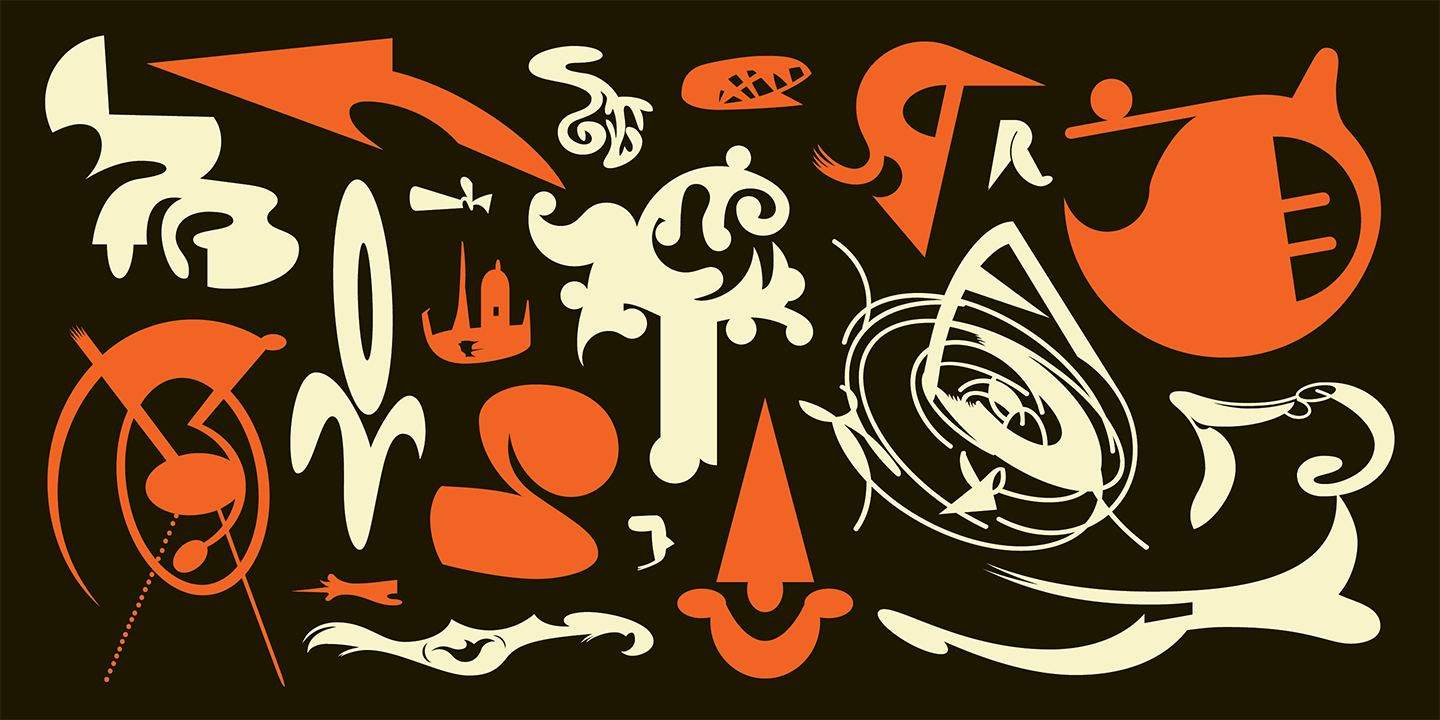
Ed Fella is considered one of the most influential typographers of the late 20th century due to his radical departure from conventional design and his impact as both an educator and practitioner. After spending nearly 30 years as a commercial artist in Detroit, Fella made a bold pivot in his career by enrolling at the Cranbrook Academy of Art, earning his MFA in 1987. This late-career shift marked the beginning of his work as a self-described “exit level designer,” in which he intentionally broke from mainstream design norms to explore the boundaries of typography and visual communication.
Fella’s work is notable for its experimental, hand-drawn approach and for refusing to adhere to traditional rules of legibility, alignment, or consistency. His compositions are highly expressive, often incorporating elements of illustration, collage, and photography. He championed a postmodern, deconstructive style that valued visual tension and personal expression over clean, corporate aesthetics. This approach significantly influenced a generation of designers, especially through his 25-year teaching tenure at the California Institute of the Arts (CalArts), where he mentored many now-prominent designers.
His influence is also recognized through several prestigious honors, including the Chrysler Design Award (1997) and the AIGA Medal (2007), which praised him for “daring to shape contemporary typography and graphic design.” Fella’s work has been featured in major design publications like Émigré and Idea, and his photographic book Letters on America (2000) is a celebrated documentation of American vernacular lettering. Today, his work resides in the collections of institutions like MoMA and LACMA, securing his legacy as a pioneering force in modern typography (Fella, as cited in your provided source).
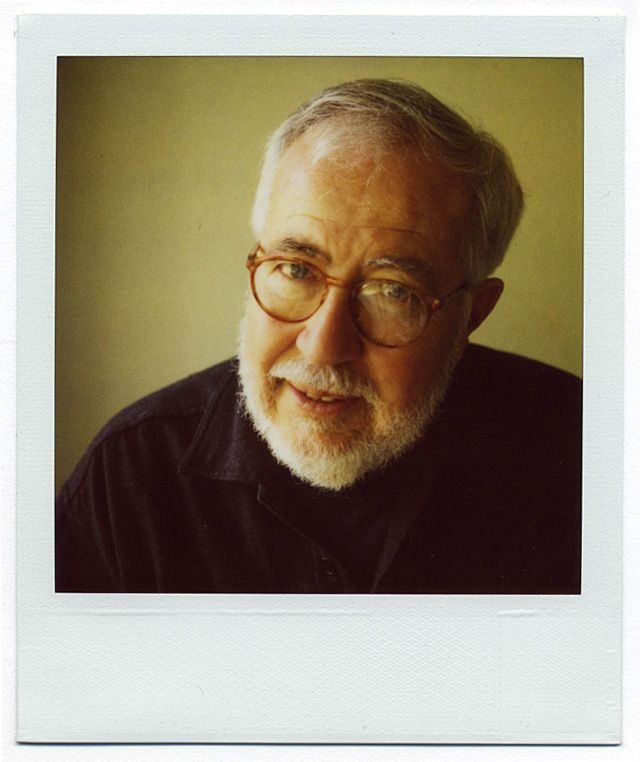
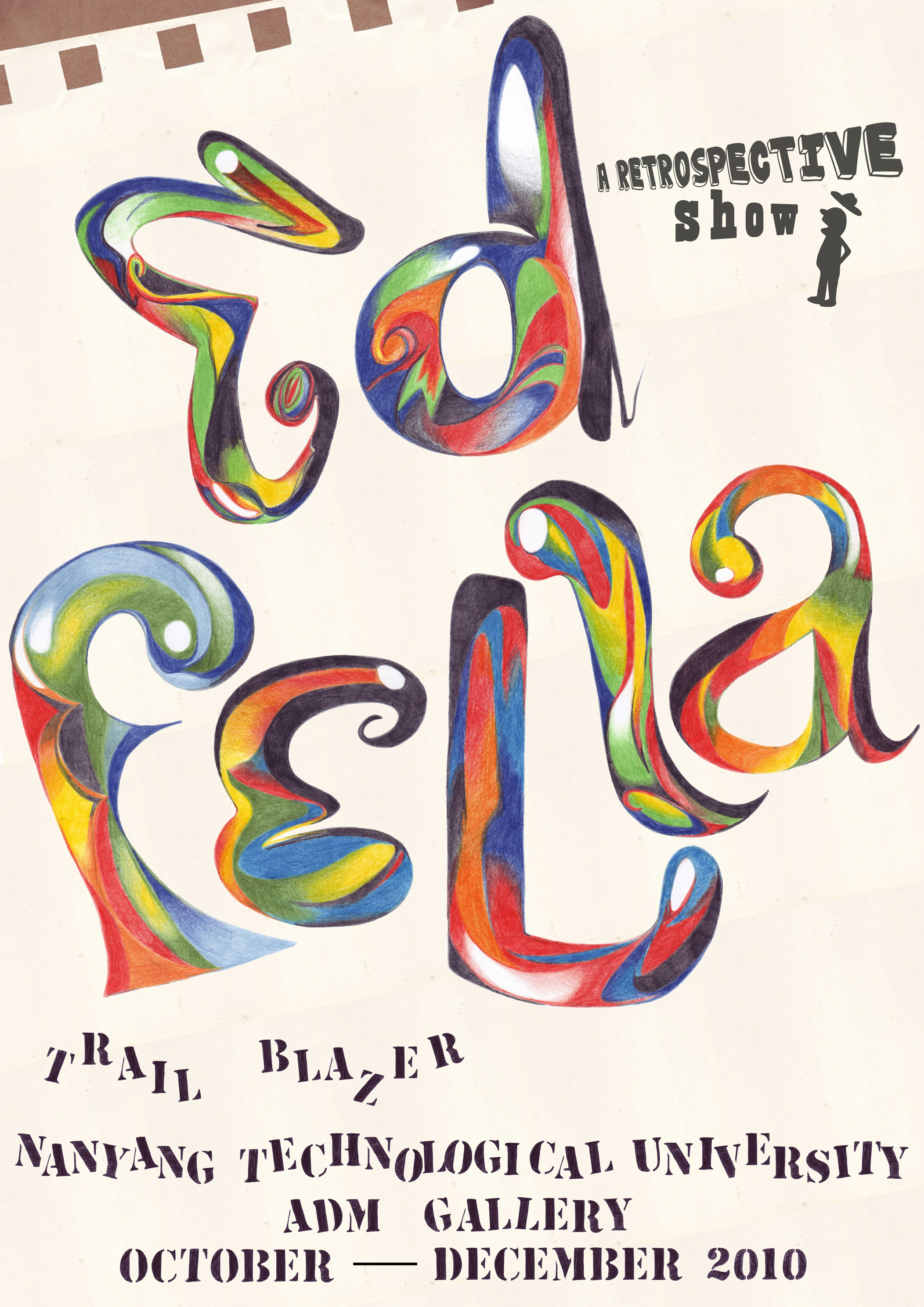
Ed Fella’s most significant contribution to typography is his rejection of traditional design conventions and his experimental, hand-drawn approach that helped define the postmodern aesthetic in American graphic design. He dismantled the boundaries between commercial design, fine art, and typography, introducing a visual language that was expressive, chaotic, and deeply personal. His work directly challenged the clean, minimal aesthetics of modernist typography by embracing vernacular styles, irregular forms, and layered, collage-like compositions. Rudy VanderLans of Emigre described Fella’s impact by stating that “Ed’s formal explorations opened up so many new avenues within graphic design. He showed us that the boundaries of graphic design were just a figment of some other people’s narrow imaginations.” Fella often made posters for his own lectures using hand-drawn lettering and typographic distortions, works that became iconic examples of postmodern typography. He called himself an “exit-level designer” after leaving commercial design to pursue more personal and conceptual work. Lorraine Wild emphasized his influence by saying, “I can’t imagine American graphic design in the late 20th century outside of the context of Ed.” Beyond his creative work, Fella’s decades of teaching at CalArts inspired generations of designers to embrace experimentation and question the norms of the field. His greatest legacy is not a specific typeface or design system, but a philosophy that legitimized rule-breaking, individuality, and expressive freedom in typography.
Ed Fella is one of the most influential designers of the past quarter century, and his impact on the design world is hard to overstate. He’s retiring, but as he puts it, his retirement will be more like a "change of treads" than a true retirement, given his long history of reinvention. Starting in Detroit, he worked in the auto industry and other commercial maintenance jobs before studying at the Cranbrook Academy of Art, which provided him the foundation to shift his career toward teaching. After years of working professionally, he made a decision to leave commercial practice and become an "exit-level designer," focusing on non-commercial work. Now, after 25 years at CalArts, he has embraced the idea of transitioning to a more open-ended role as an "exit-level educator," continuing to work and teach on his own terms. His retirement is not about slowing down but rather about shifting gears. As he said, “It kind of makes a nice symmetry, don’t you think?” Ed’s influence stretches far beyond his work as a designer. His colleagues and former students often reflect on the unique energy he brought to the classroom and to the design world at large. Rudy VanderLans, co-founder of Emigre, notes how Ed’s formal explorations opened new avenues in graphic design and expanded what was possible in the field. Lorraine Wild, a graphic designer based in Los Angeles, describes Ed as integral to the education of two generations of designers, remarking that "I can’t imagine American graphic design in the late 20th century outside of the context of Ed." Michael Worthington, a co-director of the Graphic Design Program at CalArts, shares the profound impact of Ed’s work, which combined an incessant flow of ideas with a drive to provoke thought and discussion. Louise Sandhaus, also a faculty member at CalArts, describes Ed as a person whose studio was a constant source of inspiration for everyone around him, fostering an environment of energy and creative exchange. The affection and respect for Ed extends beyond his students. His colleague, Katherine McCoy, highlights how Ed's influence reached well beyond the academic world, with his "counter-factual history" art career and the ongoing creative projects he pursued whether through collage, drawing lettering, or even his love for digital photography and blogging. The future for Ed, as he said, will be about continuing his art in new and personal ways, without the constraints of commercial obligations or formal teaching roles. And although his formal role at CalArts is ending, his presence will undoubtedly continue to be felt in the design world for many years to come.